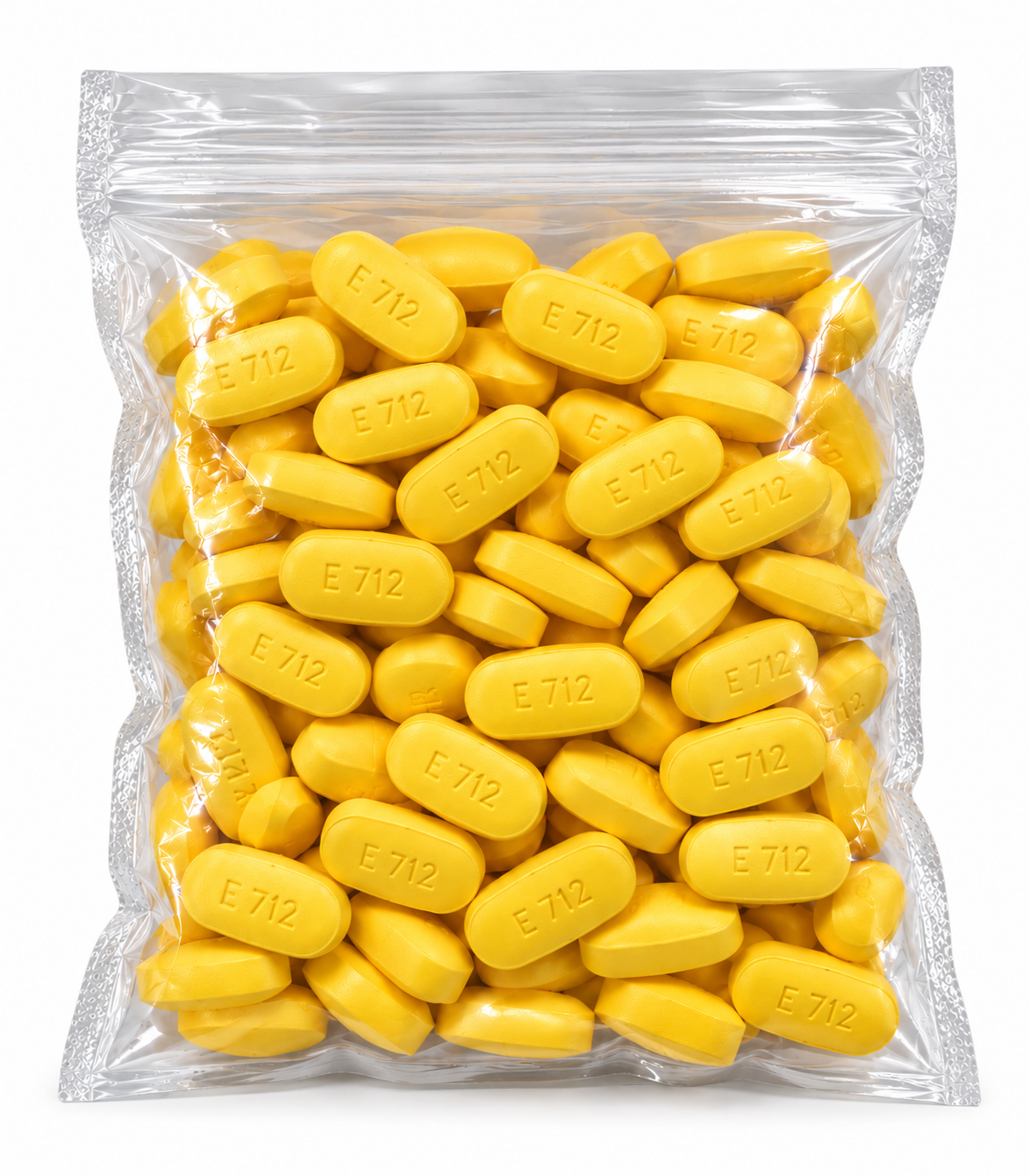
Product reference image is not available in the current asset
directory. Verify the matching image filename before publishing.
Reference image only. Tablet colour, shape, packaging and imprints cannot
prove authenticity, ingredients or authorization. Confirm the exact product with a licensed
pharmacist.
Percocet E712 is described in the reference guide as an immediate-release combination containing oxycodone hydrochloride 10mg and acetaminophen 325mg. The E712 imprint is associated with the 10/325 strength of Endocet; a tablet marking does not independently verify authenticity.
Reference price per pack$420.00$496.00
60 pieces per pack • Strength shown: 10 mg
90 pieces: $549.00 per pack · 180 pieces: $1,049.00 per pack
Submitting a cart request is not a confirmed purchase. The existing request flow does not
verify a prescription automatically. Prescription, eligibility and applicable legal
checks must be completed by authorized staff before accepting an order, collecting
payment or dispensing medicine.
Product description and identification
This combination contains oxycodone, an opioid analgesic, and acetaminophen (also called
paracetamol), a non-opioid pain reliever and fever reducer. The reference guide says E712 is
the imprint on Endo Pharmaceuticals’ Endocet 10mg/325mg strength, although the product is
commonly described as Percocet.
The guide describes the E712 tablet as yellow and oval. Colour and imprint are reference
characteristics only and cannot prove that a tablet is genuine.
Clinical context described in the reference
Official labeling described by the guide covers acute pain severe enough to require an opioid
when alternative treatments are insufficient. The guide notes that combination opioid
medicines are generally intended for short courses because opioid and acetaminophen risks
accumulate with exposure.
Important safety warnings
Oxycodone can cause life-threatening respiratory depression, addiction, abuse and misuse.
Combining it with benzodiazepines or other central nervous system depressants can cause
profound sedation, coma and death. Regular opioid use during pregnancy can cause neonatal
opioid withdrawal.
Acetaminophen adds a separate risk of severe liver injury, especially when multiple
acetaminophen-containing products are combined, the total amount is excessive, or alcohol is
involved. Early poisoning may have few symptoms; suspected excess requires urgent medical
assessment.
Possible side effects
The reference lists nausea, constipation, sleepiness, dizziness, lightheadedness, vomiting,
dry mouth and headache. Serious warning signs include slow or difficult breathing,
unresponsiveness, upper-abdominal pain, yellowing of the skin or eyes, dark urine, unusual
bruising, and severe rash or blistering.
Drug, alcohol and food interactions
Alcohol can increase sedation and breathing depression and can worsen acetaminophen-related
liver toxicity. Benzodiazepines, sleeping medicines, other opioids, carisoprodol and
sedating antihistamines can deepen sedation.
The guide also notes interactions involving CYP3A4 inhibitors, enzyme-inducing medicines,
warfarin and serotonergic antidepressants. A pharmacist should review the complete
medication list.
Pregnancy, breastfeeding and other precautions
Regular opioid exposure during pregnancy may cause neonatal opioid withdrawal. Both
ingredients pass into breast milk; the guide reports infant sedation and breathing concerns
with opioid exposure. Older adults and people with lung disease, sleep apnoea, kidney
impairment, head injury or liver disease need individualized professional review.
Storage and disposal
Keep the medicine in its original labelled container, secured away from children and other
people. Do not keep unused tablets for later use; use a pharmacy take-back service or
official disposal instructions.
Important safety information: Many medicines described here are
controlled or can cause serious harm. Keep them away from children and unauthorized users, avoid
unapproved combinations, and use only medicine supplied by a licensed pharmacy under a valid
prescription.
Patient information
Percocet E712: medicine information and safety overview
At a glance
Percocet E712 is described in the reference guide as an immediate-release combination
containing oxycodone hydrochloride 10mg and acetaminophen 325mg. The E712 imprint is
associated with the 10/325 strength of Endocet; a tablet marking does not independently
verify authenticity.
This guide page summarizes the supplied medicine-reference chapter. It is not a personalized
recommendation, a product-authentication service, or a substitute for the official package
leaflet. The exact formulation and manufacturer's authorization should be checked for the
product actually dispensed.
These links are starting points for official or patient-facing information.
Always check the leaflet and label for the precise product, manufacturer and jurisdiction.
Frequently asked questions
The guide describes oxycodone hydrochloride 10mg and acetaminophen 325mg in an
immediate-release tablet.
The guide associates E712 with the Endocet 10/325 strength. Imprints alone do not
authenticate a tablet.
Respiratory depression, opioid misuse and dependence, dangerous sedative
interactions, and acetaminophen-related liver injury.
The reference warns that alcohol increases sedation and respiratory risk and can
worsen acetaminophen-related liver injury.