
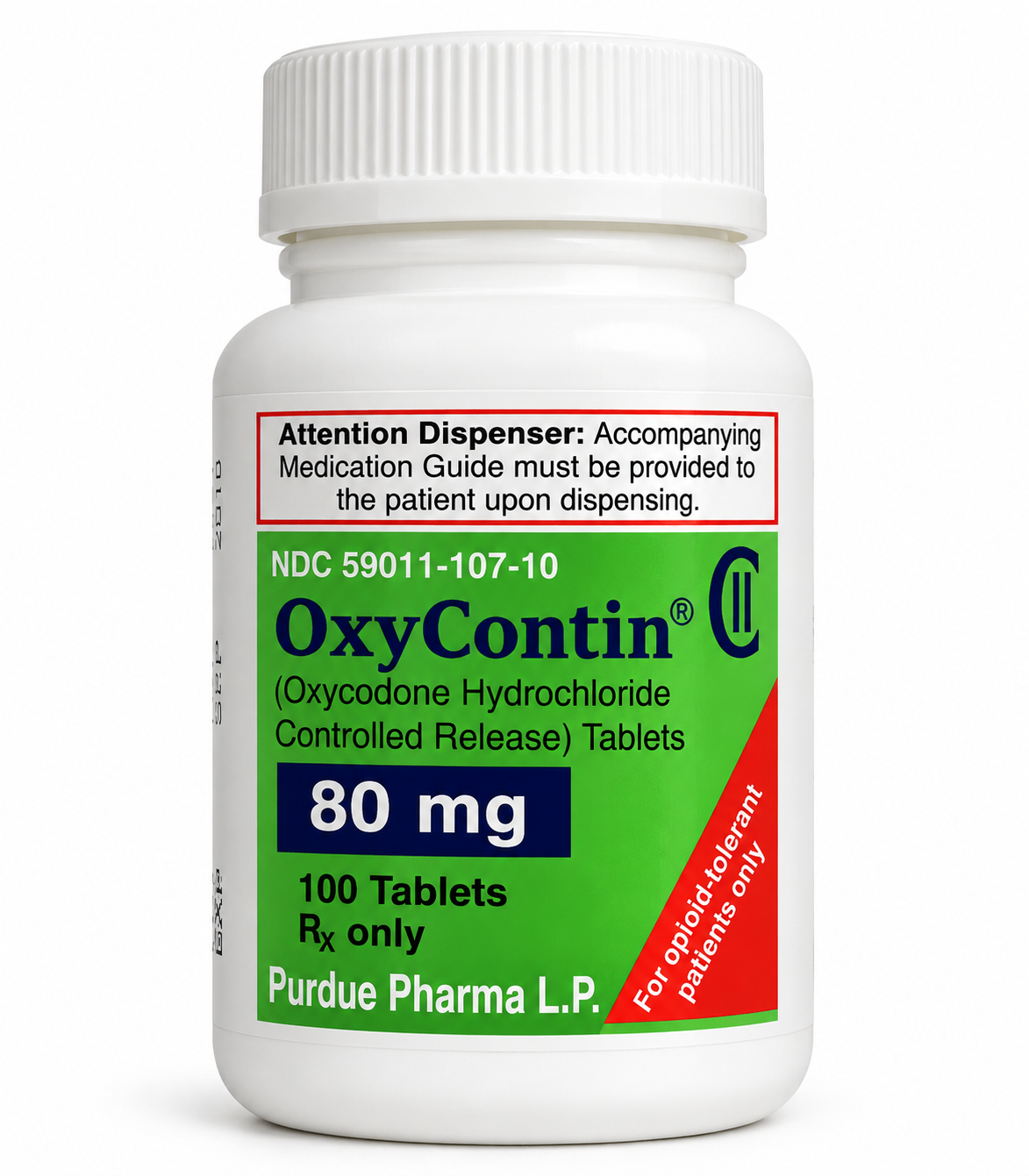
What is Oxy 80mg Green?
Oxy 80mg Green refers to 80mg extended-release oxycodone hydrochloride. Oxycodone extended-release is a long-acting opioid analgesic designed to release medicine steadily over approximately 12 hours.
Uses and Medical Information
Under the FDA labeling described in the supplied reference material, oxycodone extended-release is intended for severe pain requiring daily, around-the-clock, long-term opioid treatment when alternative treatments are inadequate or cannot be tolerated.
It is a long-acting formulation rather than a short-acting pain medicine. The 60mg and 80mg extended-release strengths have additional opioid-tolerance restrictions.
Dosage and Formulation Information
Oxycodone ER is an extended-release oral tablet intended to release medicine over time. The exact treatment regimen must come from the patient's own prescription and official prescribing information.
Extended-release oxycodone tablets must not be crushed, chewed, broken or dissolved. Altering the tablet can release a dangerous amount of medicine at once and has been associated with fatal overdoses.
Common Side Effects
The reference material identifies the following effects associated with oxycodone ER:
- Constipation
- Nausea and vomiting
- Sleepiness and drowsiness
- Dizziness
- Headache
- Itching
- Dry mouth
- Sweating
- Reduced energy
Important Safety Advice
Oxycodone ER carries serious opioid-related safety risks, including potentially fatal respiratory depression, addiction, abuse and misuse.
- Potentially fatal respiratory depression.
- Addiction, abuse and misuse.
- Neonatal opioid withdrawal syndrome.
- Dangerous interactions with benzodiazepines.
- Profound sedation, coma and death.
Additional precautions include possible adrenal insufficiency, severe constipation, low blood pressure when standing and worsening sleep apnoea.
Drug, Food and Alcohol Interactions
Oxycodone can interact with substances that influence alertness, sedation or breathing.
- Alcohol
- Benzodiazepines
- Sleeping medicines such as zolpidem and zopiclone
- Other opioid medicines
- Muscle relaxants
- Some anticonvulsants
- Sedating antihistamines
Medicines affecting the CYP3A4 enzyme may also influence oxycodone levels. Patients should provide their complete medication and supplement list to their healthcare professional.
Pregnancy and Breastfeeding
Regular opioid use during pregnancy can cause neonatal opioid withdrawal syndrome. Oxycodone can also pass into breast milk. Pregnancy and breastfeeding decisions require individual professional assessment.
Older adults and people with sleep apnoea, chronic lung disease, or kidney or liver impairment may require additional assessment.
Overdose Warning Signs
Opioid overdose can become life-threatening because breathing may slow or stop.
- Slow or shallow breathing.
- Extreme sleepiness.
- Inability to wake up.
- Small pinpoint pupils.
- Cold or clammy skin.
- Blue lips or fingertips.
- Confusion or fainting.
Give naloxone if available and call emergency services immediately when opioid overdose is suspected.
Frequently Asked Questions
What is Oxy 80mg Green?
It is a reference name associated with 80mg extended-release oxycodone hydrochloride. A medicine's identity cannot be established by appearance alone.
Is Oxycodone a controlled medicine?
Oxycodone is classified as a Schedule II controlled substance in the United States.
Can an extended-release tablet be crushed?
No. Altering an extended-release tablet can release a dangerous amount of medicine at once.
Can Oxy 80 pills be counterfeit?
Yes. Pills obtained outside regulated pharmacy channels may contain fentanyl or other unknown substances.
What should someone do during a suspected overdose?
Give naloxone if available and contact emergency services immediately.
Primary Medical References
Medical content is educational. Licensed-clinician review is pending.